
14.07.2026
From the control panel to the “WOW” moment: HMI design in mechanical engineering
Mechanical and plant engineering is a key industry in Europe. It drives innovation, ensures competitiveness, and enables progress in nearly every sector. With its “This is MachineryWOW” campaign, the VDMA highlights just how relevant and impactful this industry is. But the real “WOW” moment only happens when people use technology safely, efficiently, and intuitively. This is exactly where good HMI design in mechanical engineering comes into play and this is exactly where we at UID are part of that “WOW.”
MachineryWOW begins at the interface between humans and machines
Behind every impressive machine lies more than just outstanding technology. According to the VDMA, the German machinery and plant engineering industry generates revenue of around 250 billion euros and employs over one million people, an industry that is rightly considered the backbone of the European economy. However, the achievements of this industry are remarkable not only because of its machines, but also because of the people who develop, produce, operate, and maintain them.
For technology to become a true experience, the connection between people and machines must be right. The Human-Machine Interface, or HMI for short, is the direct interface between the two. Through the user interface, users experience a product and a brand. This is what determines whether a system is used profitably or merely operated in a makeshift manner. So the “machine wow” doesn’t start with the motor or the sensors, but rather at the moment a person understands the machine.
Why HMI design is key to success in mechanical engineering
Machines are becoming more powerful, more connected, and smarter. At the same time, the demands placed on operators, service personnel, and production managers are increasing. A modern user interface must therefore do much more than simply display information. It must help people make the right decisions quickly in complex situations and perform their tasks safely.
At UID, we design digital products and industrial applications in a way that makes technology understandable to people. This isn’t just a cosmetic touch-up at the end of the development process, it’s a business factor. A good user experience speeds up the onboarding of new employees, reduces operating errors, and increases process efficiency. It boosts acceptance of new technologies and improves service and maintenance processes. In short: Good HMI design makes machines more efficient because it makes people more efficient.
In doing so, we take into account the specific conditions of industrial environments. A surface that works well in an office may fail in a noisy, dark production hall or when operated while wearing gloves. That is why the context of use, target groups, and tasks are the starting point for every design, not the technology alone.
Added to this is an often-underestimated effect: Users experience the brand through its operation. A well-designed, aesthetically pleasing HMI conveys quality and trust, thereby becoming a key differentiator in the competitive landscape. As products become increasingly comparable from a technical standpoint, the user experience often determines which machine an operator ultimately chooses in the long term.
OPTIMA: A user interface that feels familiar across different machines
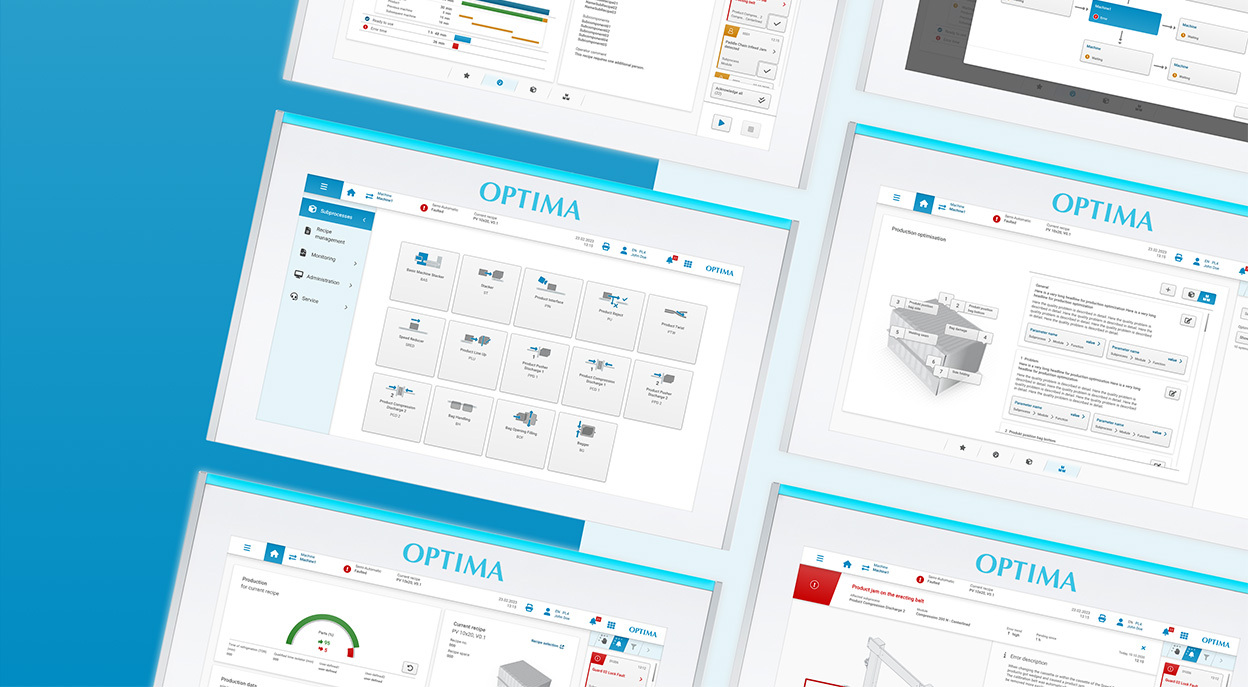
Our collaboration with OPTIMA demonstrates how this approach pays off in practice. Together, we have developed a consistent operating concept for various packaging machines. The result: Operators can get up to speed more quickly, regardless of the machine type or application.
The advantage lies in repetition. Recurring interaction patterns reduce training requirements and increase process reliability because people can transfer their operational knowledge from one machine to the next. Complex production processes become more transparent and easier to control. The “wow” factor here doesn’t come from more features, but from an interface that feels intuitive.
TRUMPF Oseon: When the smart factory becomes easy to understand
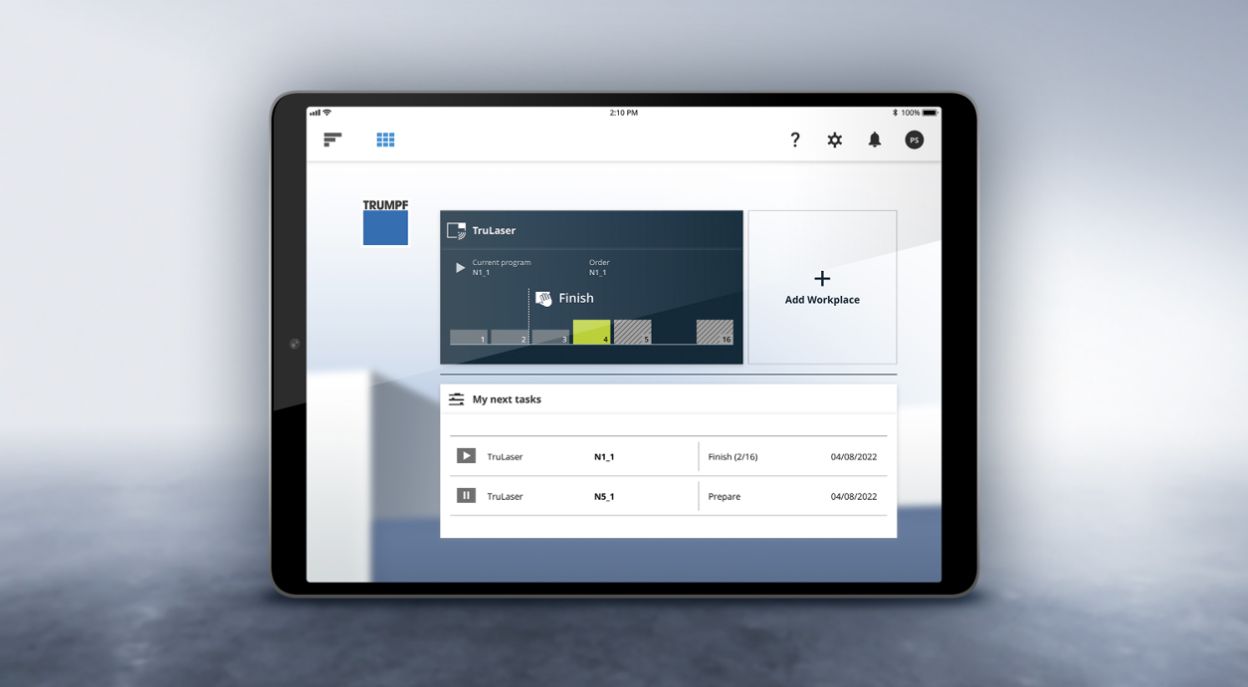
User experience also plays a central role in networked production. A solution was developed for TRUMPF Oseon that intelligently supports production and logistics processes in the smart factory and makes them transparent.
A user-centered design helps employees monitor material flows, identify priorities more quickly, and manage processes in a targeted manner. This transforms a wealth of complex data into a clear basis for decision-making. The result is greater transparency, shorter response times, and more efficient production. Industry 4.0 in particular demonstrates that it is not the volume of data that creates value, but rather its clear presentation for the people who work with it.
The real “wow” moment lies in the details: when an application displays exactly the information needed to make a decision at just the right moment, rather than overwhelming operators with too many options. This focus on the essentials is challenging, because it requires a true understanding of the reality of factory work. That is precisely the difference between an interface that works and one that inspires.
Bosch Rexroth Hydraulic Hub: Service that extends the “WOW”
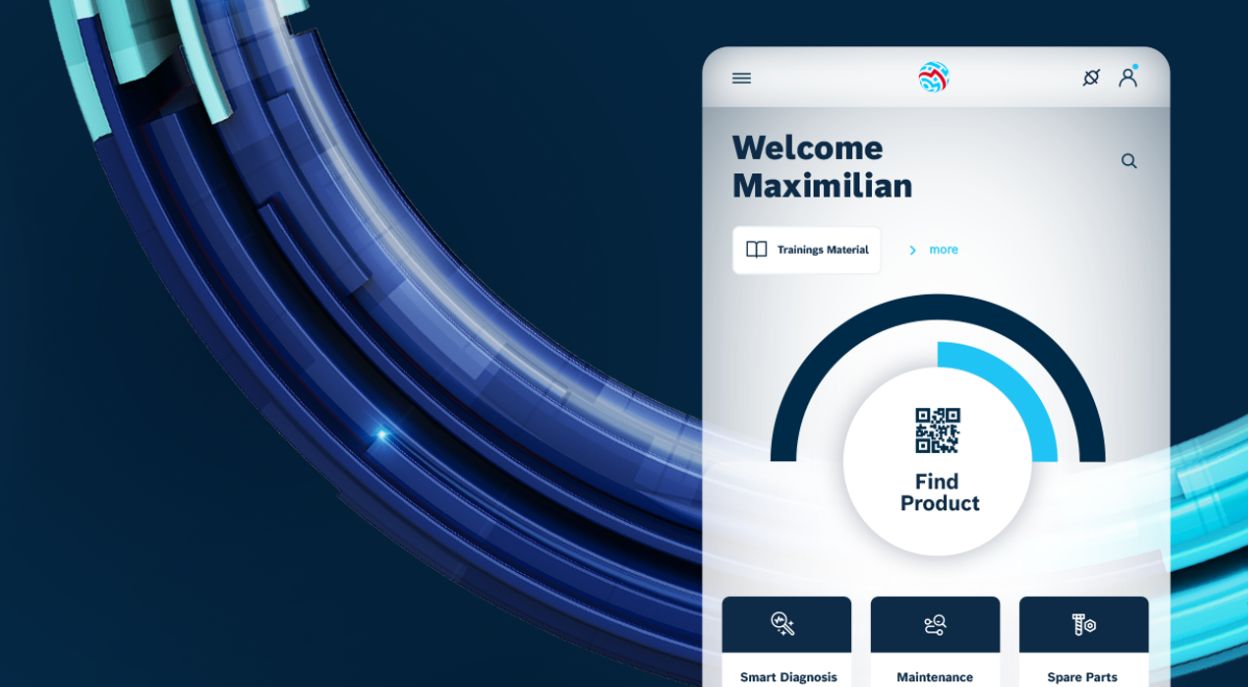
The MachineryWOW experience doesn’t end with the machine itself, it continues with service. The Bosch Rexroth Hydraulic Hub is a digital service offering that significantly simplifies access to information, maintenance services, and support. The platform consolidates information on approximately 540,000 hydraulic components and makes it available on mobile devices in an intuitive and context-sensitive manner.
Users quickly receive exactly the information they need in any given situation. This speeds up service processes, reduces downtime, and empowers users to act independently. For this hub, our concept and design experts worked closely with the teams at Bosch Rexroth. This is a good example of how modern HMI design brings intelligent services to life.
People-centered development: The real benefit for machine operators
The three projects are united by a common principle: human-centered development. Instead of simply stringing together functions, we start with the people who work with the machine every day. We analyze their context of use, their tasks, and their goals, and design the user interface based on that.
For machine operators, this is a tangible competitive advantage that extends far beyond the point of sale. Fewer operator errors mean less downtime and lower follow-up costs. A shorter training period reduces the workload on experienced specialists and helps address the shortage of skilled workers. Consistent, intuitive operation increases process reliability and accelerates the return on investment in new technology. And a well-designed service concept keeps systems productive for longer. Good UX in mechanical engineering is thus not only a quality feature of the product but also contributes to cost-effectiveness over the entire lifecycle.
As a pioneer in UX with over 25 years of experience and a member of the VDMA, we understand the technical, regulatory, and industry-specific requirements of this sector. We combine in-depth user research with aesthetic, functional HMI design, thereby translating user needs into concrete product decisions.
It is important to us that good UX is not just a one-time project, but is embedded within the organization. After all, a lasting impact is only achieved when user-centered thinking becomes second nature and the people in the company carry it forward on their own. From the initial idea through the concept to implementation and maintenance, we therefore support machinery and plant manufacturers throughout the entire product lifecycle, as partners on equal footing.
People make the difference
The VDMA campaign rightly emphasizes that mechanical and plant engineering is about much more than just technology. Behind every innovation are people. User experience ensures that these people can reach their full potential. It bridges the gap between technical excellence and successful application.
That is why we are convinced that the “MachineryWOW” is not created by innovative machines alone. It happens when technology and people work together perfectly. We shape this connection and bring the “MachineryWOW” to life.
The author
Franz Koller founded UID in 1998 with Dr. Claus Görner and played a pivotal role in developing and shaping usability and UX in Germany.

More on the topic
- Kostenfreie UID Live Sessions zu den wichtigsten Trends um digitale Produktentwicklung (in German)
- UID Masterclasses zum User Centered Design, Journey Mapping, Designsysteme und Interaktionsgestaltung (in German)
- UX Design
- User Research
- Insight: Why digitalization fails and how people make it effective
- VDMA campaign: Wir sind der MaschinenWOW (in German)
- Subscribe to the UID Newsletter (in German)