
28.04.2026
Why digitalization fails – and how people make it effective
The VDMA has published its latest report on the digital transformation in mechanical and plant engineering in 2026 to coincide with the Hannover Messe. It shows an industry that has come a long way technologically: digital strategies have been established, new technologies are available and many pilot projects have been implemented or launched.
And yet, in our consulting and changitor work, we observe time and again that technology alone changes nothing. Impact is only created where digital solutions make a concrete improvement to people’s everyday working lives.
UID employee Lisa has been managing projects in the industrial environment for years and shows us: It’s time for a new key question!
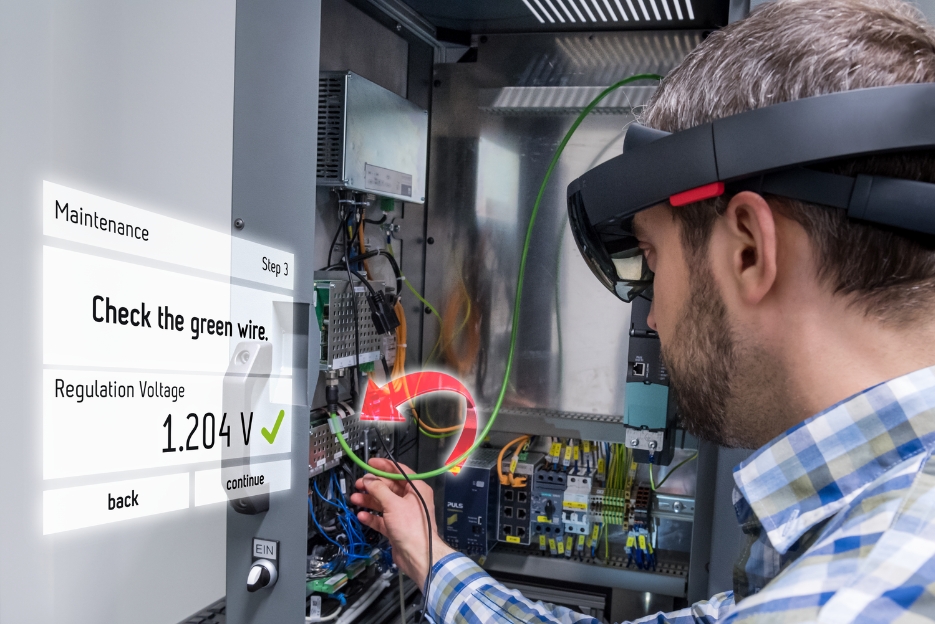
Digitalization is not an end in itself
In mechanical and plant engineering, digital transformation is often thought of from a functional and technical perspective:
- What systems do we need?
- What data can we use?
- Which technologies are future-proof?
But digitalization is not an end in itself – it is successful when it relieves people, provides orientation and creates security in action.
These questions are legitimate, but they fall short. Digitalization does not unfold its impact at the level of architectures, roadmaps or tool landscapes. It unfolds where it changes people’s everyday working lives.
If digital solutions do not generate tangible added value for those who work with them on a daily basis, they remain ineffective – or are even seen as an additional burden experienced. Then arise Shadow processesresistance or simply indifference. The technology may be good, but the benefits remain abstract.
The biggest levers lie in everyday working life
Digitalization offers enormous potential, especially in mechanical and plant engineering – if it is consistently aligned with people’s needs:
- Mitigating the shortage of skilled workers
Digital solutions cannot replace the lack of skilled workers. But they can make experience accessible, secure knowledge and enable less experienced employees to act more quickly. This relieves the burden on experts and increases the organization’s resilience.

- Shorten induction and training
When knowledge is context-related, situational and available where it is needed, learning shifts closer to real work. This reduces training costs and uncertainty and accelerates productive collaboration.
- Reducing downtime = reducing stress
Predictive maintenance and data-based early warning systems are not just about efficiency. They mean fewer unplanned interventions, less “firefighting –situations” and more predictability for everyone involved.
- Rethinking efficiency
Efficiency doesn’t just mean working faster. It also means reducing friction: fewer media disruptions, less duplicate documentation, less unnecessary coordination. Good digital processes not only save time, but also nerves.
- Strengthening employee loyalty
Today, digital tools are part of the quality of work. Modern, supportive tools signal appreciation and professionalism. Nobody stays because of “Industry 4.0”, but v ome leave because of poor tools and unnecessary complexity.
What this means for companies
To achieve an effective digital transformation, it is not enough to introduce systems or automate processes. It is crucial to consistently think about digital initiatives from the context of use. This is precisely where UID comes in.
UID supports companies in the mechanical and plant engineering sector in shaping digital transformation in a human-centered way – from the first key strategic question to effective implementation in everyday working life.

Human-centeredness is not a “soft topic”
Digital transformation is often treated as a technical or strategic issue. The human perspective is then seen as an accompanying factor. Important, but subordinate. This view falls short.
People-centricity is not a feel-good topic. It is a tough success factor.
Digital solutions can only be scaled, accepted and further developed if they are compatible with real working methods. Only if they create orientation instead of generating additional uncertainty will they contribute to transformation.
Here come perspectives such as UX research, service design and change management come into play – not as an add-on, but as an integral part of digital initiatives.
Shaping digitalization effectively
It requires more than just technological expertise. It requires a willingness to question familiar ways of thinking and to allow a change of perspective. Away from systems and towards people.
From a Changitors perspective, this means:
Working with the affected roles at an early stage
Taking usage contexts seriously, not simplifying them
Thinking about processes, systems and organization together
Understanding digital transformation as a learning process – not a rollout

Another key question
Perhaps it is time to reformulate the key issue of digital transformation in mechanical and plant engineering.
Not
What can we digitize?
But
Who are we doing this for – and what difference should it make in everyday life?
The author
Lisa Reimer has been a Senior User Experience Consultant for over 15 years, supporting clients from various industries on their journey from the idea to the finished product or service. She primarily designs and evaluates suitable user interfaces. She also enables project teams to work innovatively and agilely. For example, she uses the co-creative process LEGO® SERIOUS PLAY® to promote new processes and ideas and to make collaboration inspiring. As a speaker at various events, Lisa passes on her knowledge of environment design and digital transformation.

More on the topic
- UX for startups
- Our UX showcases
- Multiple awards: Thermomix TM6®