
02.03.2026
Design tokens: small building blocks, big AI impact
AI will fundamentally change design processes and design systems. Design tokens are the basis for preparing design systems for the future. We explain the trend around design tokens and show you why now is the right time to get started with design tokens.
Design systems are at a turning point. The demands on digital products are growing – faster, more versatile, more complex. Today, companies have to handle accessibility, dark modes, multi-brand setups and new front ends in parallel. At the same time, the pressure to develop products more efficiently and consistently is increasing.
Against this backdrop, one topic is rapidly gaining importance: design tokens. And alongside it, a second: the question of how artificial intelligence (AI) can automate and accelerate these structures in the future.
We at UID are convinced:
Without design tokens, AI will not scale in design systems. And without AI, design systems will not be efficient enough in the future.
What design tokens are – and why they are becoming important
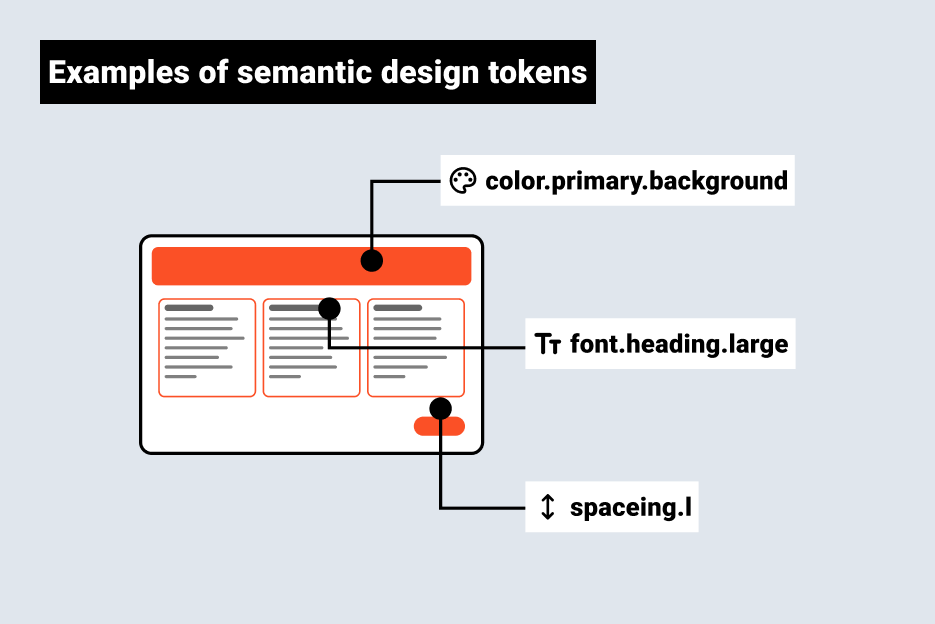
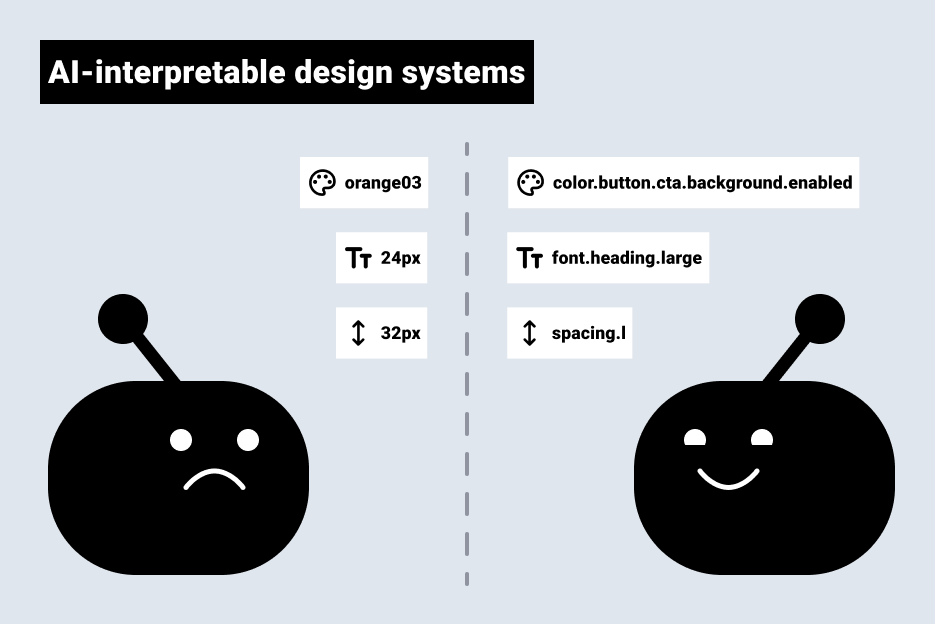
Design tokens can be thought of as the smallest structured building blocks of a digital design. They translate design values – colors, typography, spacing, radii, animations – into a machine-readable form.
Instead of a hex code or an arbitrary number of pixels, for example, it then says:
- color.primary.background
- spacing.l
- font.heading.large
This clear, unambiguous designation makes tokens a universal translation layer between design and development.
Linking design and development – more relevant than ever
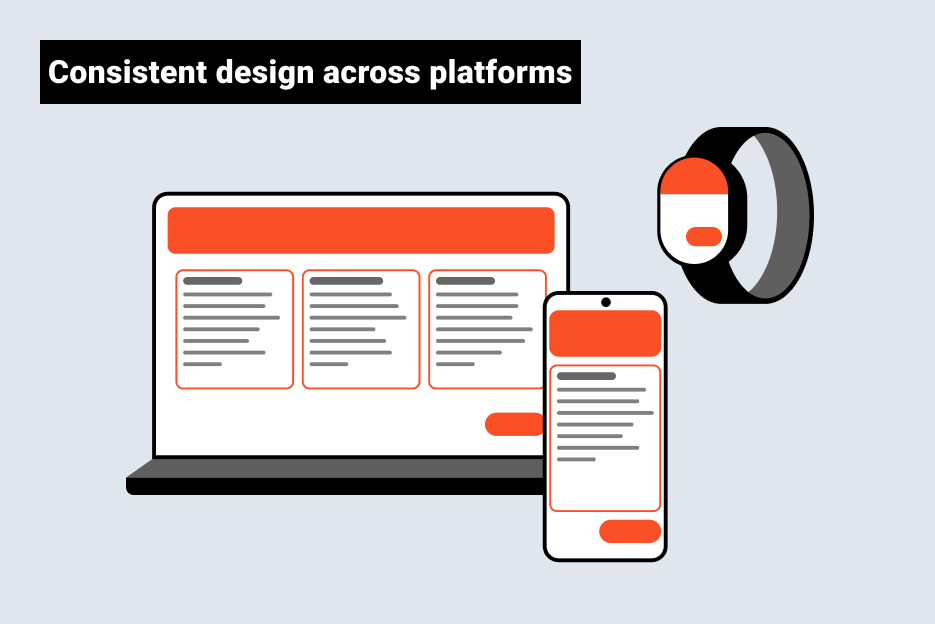
- Design tokens create consistency across products
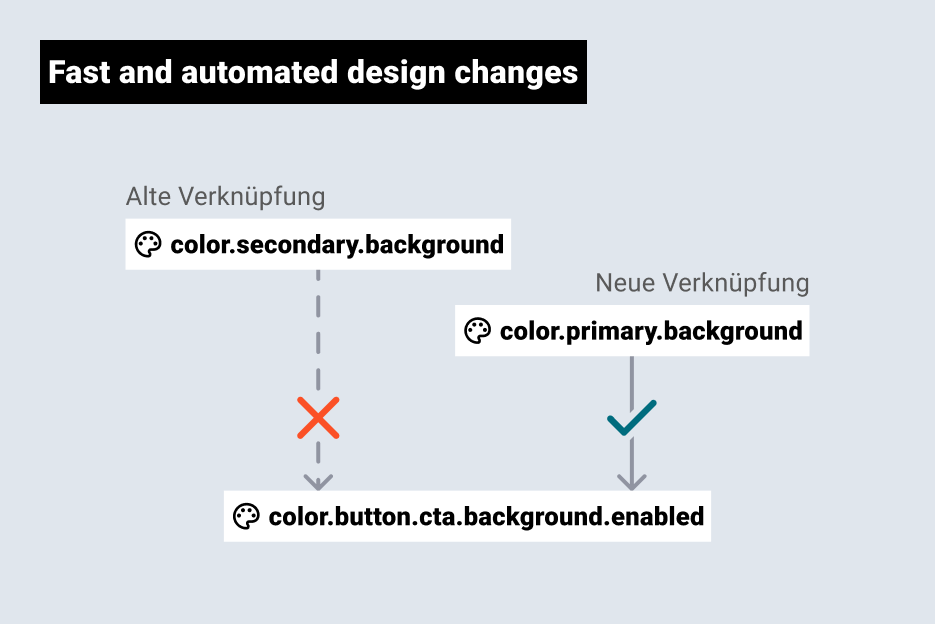
- Design tokens enable faster rollouts of design changes
- Design tokens reduce errors and duplication of work
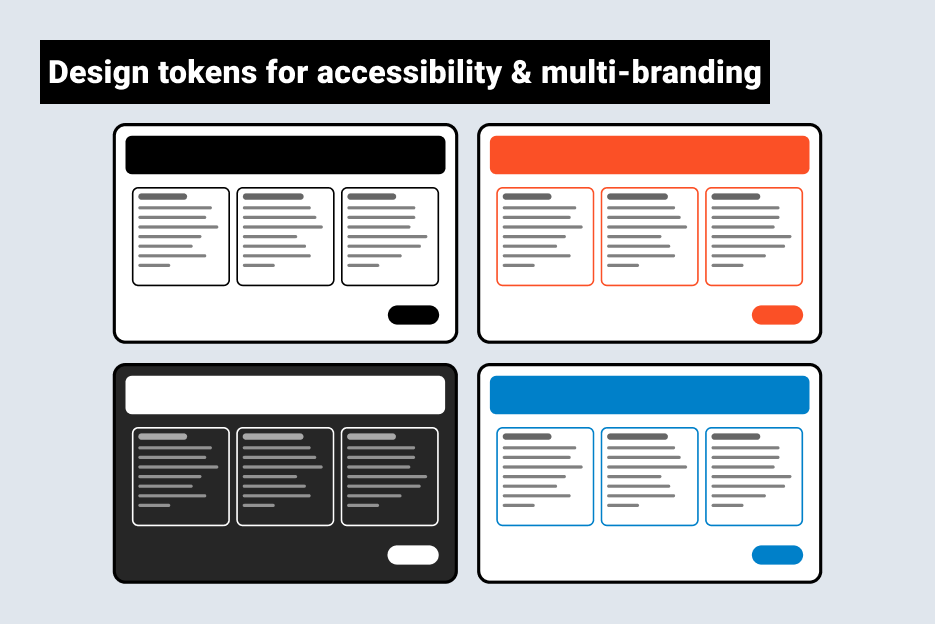
- Design tokens scale multi-brand approaches and themes
- Design tokens form the basis for automation
Design tokens are therefore no longer a trend. They are the foundation of modern design systems and a prerequisite for everything that AI will automate in the future.
Tokenization – indispensable for modern design systems
Companies are increasingly facing challenges:
- There are more and more interfaces, channels and variants
- Corporate identity updates must be rolled out in the shortest possible time
- The requirements for accessibility are increasing
- Design teams work internationally and remotely
- Development cycles are getting shorter
Design tokens address precisely these challenges. They ensure that each team no longer invents “its own color” or “its own button spacing solution”. Instead, a defined set of tokens enables structured, reusable design decisions. This structure is already a lever for efficiency today. But its greatest potential will unfold with the next evolutionary stage: AI-supported design systems.
The AI advantage – No automation without tokens
AI can only provide meaningful support for design processes if it understands which design values are used where.
An AI model cannot reliably navigate through a Figma or CSS maze if:
- Colors are not consistently named
- Spacing values vary
- Typography is not clearly defined
- Components are structured inconsistently
Design tokens make design predictable, structured and interpretable – not only for teams, but also for AI.
This will enable AI models in the future:
- Automated global roll-out of design changes
- Suggest or directly apply accessibility optimizations
- Generate light/dark modes
- Create brand variants
- Recognize and correct inconsistencies
- Automated adaptation of frontends in headless systems
Tokens make design understandable for machines – and therefore fully automatable.
Generative UIs as the next evolutionary step
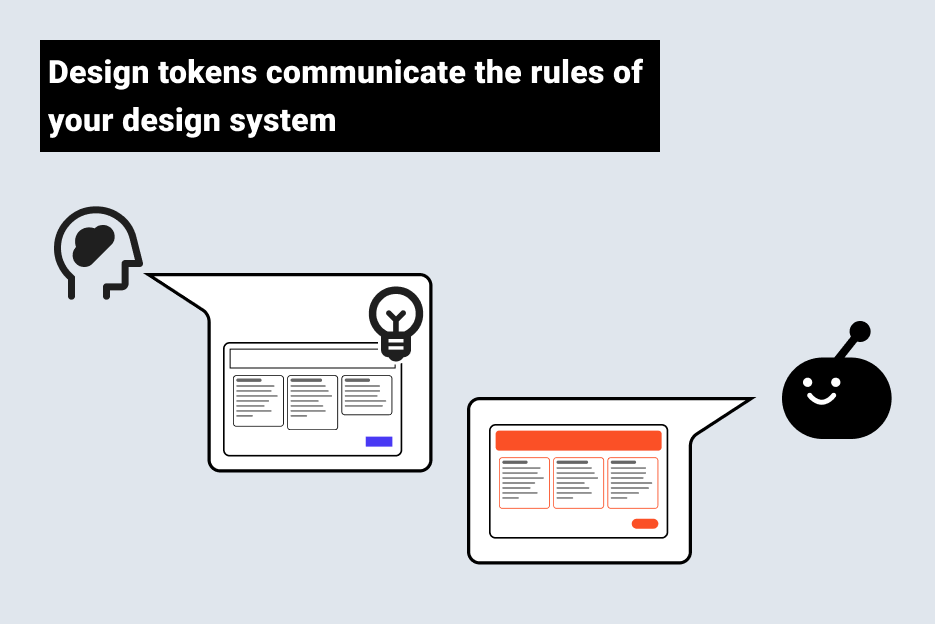
Generative UIs – i.e. user interfaces that are created, varied or adapted by AI – are increasingly becoming a reality. However, AI needs a clear structure to ensure that these interfaces are not arbitrary but remain consistent and true to the brand.
Design tokens provide this structure because they define:
- which colors, spacing and fonts are permitted
- how components must be structured
- what semantic meaning design values carry
- which rules apply in each generated state
This creates a kind of design grammar that enables AI to generate new variants without jeopardizing the consistency of the design. Generative UIs are therefore not a creative product of chance, but a scalable extension of the design system.
Companies that set up their token structures properly now are therefore creating the conditions for AI to be able to reliably generate and adapt entire interface areas in the future.
Where AI is already at work – from our customer projects
We are already working with our customers on AI-supported automation that makes design systems noticeably more efficient:
- Automatic generation of alternative themes
- Proposals for harmonizing inconsistent design values
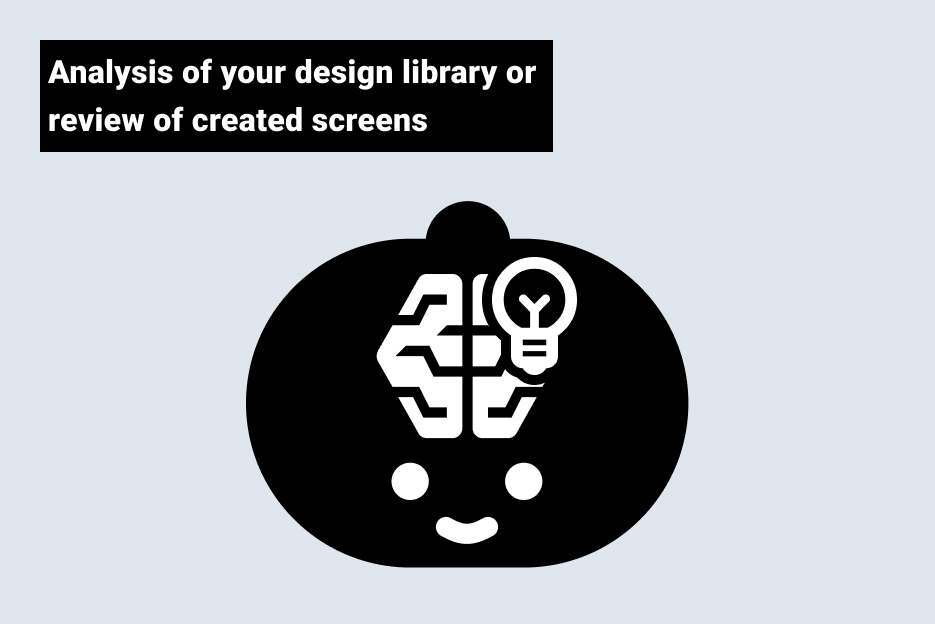
- Analysis of existing libraries
- First token-based design changes that go directly into development artifacts
Of course, not everything is ready for production at the moment. However, companies that experiment early on will benefit much faster in the future.
Opportunities and risks – a realistic view
Opportunities
- Massive increase in efficiency
- Inconsistencies become visible
- Faster product development
- Fewer errors, less redundancy
- Sustainable systems
- AI readiness
Risks
- Initial effort for token setup
- Structural legacy in existing designs
- Organizational change
- AI workflows often only work partially today
Why companies should act now
AI will become a standard component in design and product teams over the next few years. However, AI can only be used effectively if companies prepare their design systems now to enable automation.
In concrete terms, this means
- Introducing tokens consistently
- Standardize design systems
- Establish governance structures
- Harmonizing technology stacks
- Test the first AI workflows
Design in the future – structured, automated and AI-supported
Design tokens are the key to a future in which AI enables companies to develop designs faster, more consistently and more efficiently. Companies that create token structures today and test the first AI workflows are laying the foundations for scalable next-generation design systems.
The author
As a user experience designer at UID GmbH, Karolin Adlung consistently designs digital products from the user’s perspective – and naturally takes accessibility into account. She is particularly interested in design systems and the question of how design and development can work together even better.Karo is also one of our speakers at our regular UID Live Sessions.

More on the topic
- Insight: Top 10 FAQ on design systems
- Insight: Added value instead of hype with human-centered AI
- Services: UX Design at UID
- Subscribe to UID Newsletter (in german)